Cultural Differences

The Imagery of Language

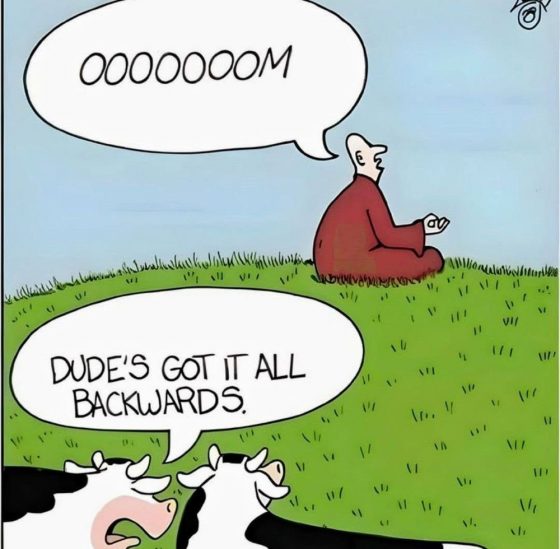
he got it all wrong

I left Russia for America when I was thirteen — that’s a difficult age to make cultural and language adjustments. Others in my family are amazing at translating from one language to another; but I’m not particularly good at it. I find learning a new language and a novel way of thinking very hard. If fact, I get stuck in a language — when I think of something in English, it is extraordinary hard for me to retrieve just the right set of words in Russian. It feels like there is a physical divide in my brain between the regions that utilize English and those that work in Russian. For years, I’ve tried to learn French too, and all I have to show for it are just a few scatterings of words. But I love the musicality of French almost as much as that of Russian. I can feel the possibilities, even as I can only grasp a little bit of them. For a wonderfully nuanced discussion of being forced to exist in a new language, I strongly recommend a book by that title: Lost in Translation: A Life in a New Language by Eva Hoffman. I particularly identify with…
The Impact That Words Make

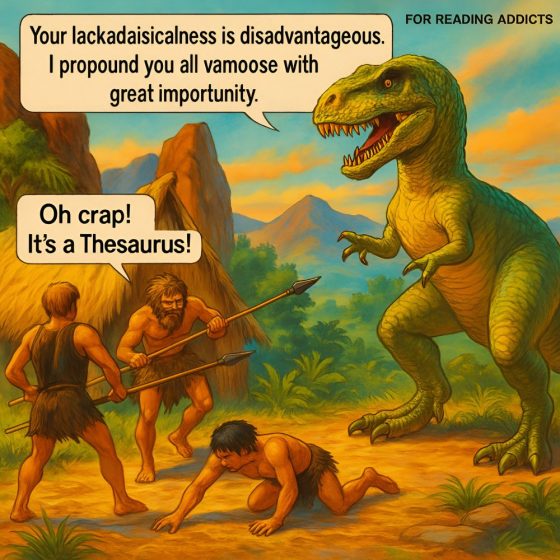
Your lackadaisicalness is disadvantageous.

Words help us remember. Words sharpen our senses and help us give shape and texture to everything we observe. Words have interesting sounds and mouth feel. The word “zebra” doesn’t only conjure up a striped ungulate, it pleasantly vibrates on our lips and tongue. It’s fun to say. The word “power” pushes out with force. It can even produce spittle. It’s aggressive. The word “emolument” is slippery, almost slimy. It feels like something unpleasant is rolling in our mouth. “Sun” doesn’t only describe our star, but it feels bright. “Onomatopoeia” is a mouthful, and it describes words that suggestively sound like the ideas they represent. “Bang” is both the sound that something makes and the word used to describe that sound. “Splat” is another example of a word that mimics the sound. And so is “buzzer” — another word that makes our teeth vibrate. Human languages are full of onomatopoeic words. In our household we use the word “pook” to refer to farts. It’s a Russian word, but easily understood and remembered by an English speaker. Consider what happens when you look at a series of images. As they are flashed on the screen, you don’t need language to identify…

We Are The Heroes

scifi hero

We are the heroes of our own journey through life. That’s true whether or not we are basically good. No matter what kind of actions they took, Hitler, Putin, Jack the Ripper, or the Unabomber always viewed those actions as heroic nationalist, political, or social necessities done for the glory of “their” people. Their life choices were, in their minds, necessities of the moment. Even if people died, it was for the greater good.

Quest for Immortality

The Fountain of Youth (1546)

Whenever it comes, death seems very unfair, and humans have been hard at work on combating this scourge for as long as we can remember. After decades of self-investment via education, relationships, employment, children, hobbies, travel and experiences, who wants to just give it all up? We hate death when it comes at an old age, when it cuts short life in its prime, and perhaps particularly when it gets the young before they had a chance to live. Humans have longed to extend their lifespans or, barring that, the memory of their existence for as long as we have records of humanity.

Fog of War

Faces of war

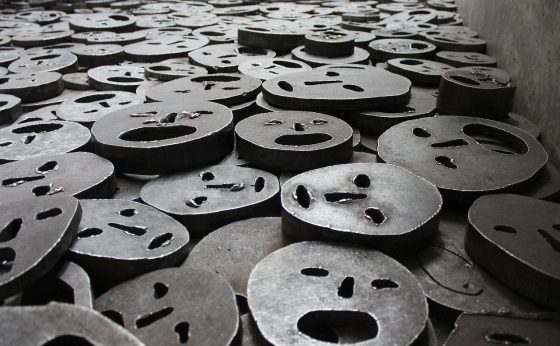
Once again, we find ourselves bearing witness to yet another war with a non-stop spectrum of horrific stories and images that make our souls shudder and our hearts break. It is easy to get drawn into a narrative of good guys versus bad guys. It is easy to find ourselves in a heated screaming fight over why one side or the other are the evil ones. But wars at ground level are not really about good versus evil; they are about survival. Regular people get swept up in evil and find themselves doing things that they never would have thought possible. War turns normal people into monsters. Robert Sapolsky wrote: “We judge ourselves by our internal motives, but others by their external actions. … When Thems do something wrong, it’s because they’re simply rotten. When Us-es do it, it’s because of an extenuating circumstance”. Imagine the great harm you might inflict on another to protect a child you love. Because our motives are “pure” they mitigate our actions — allowing ourselves not to think of ourselves as monsters — even when we do objectively terrible things. We are all good at rationalizing our own behavior. To overcome our natural instincts…

Expanding Definitions

Signal

I have taught children, teens, and adults for many years. And I am noticing a trend — as a people, in the name of a more just society, we try to make our definitions ever more expansive. Sounds like great thing, right? But consider this. Decades ago, children diagnosed as autistic were few and their symptoms had to be severe to get this diagnosis. Now we have an autistic spectrum. More and more children and adults get placed on this spectrum. We seem to want to catch as many autistic individuals as we can by expanding the definition of what it means to be on the spectrum. We are being ever more expansive in the name of justice. But shouldn’t we be expanding the spectrum the other way instead? Perhaps it is better to be more inclusive in our definition of what it means to be on the “normal” spectrum. We are all different. We all have a grab bag or positives and negatives. And that’s a good thing. It takes all of our differences to create a great society. So we can treat ADHD kids as different from “normals” or we can think of them as us. Dividing children…

Love of Reading

Monument to Jules Verne

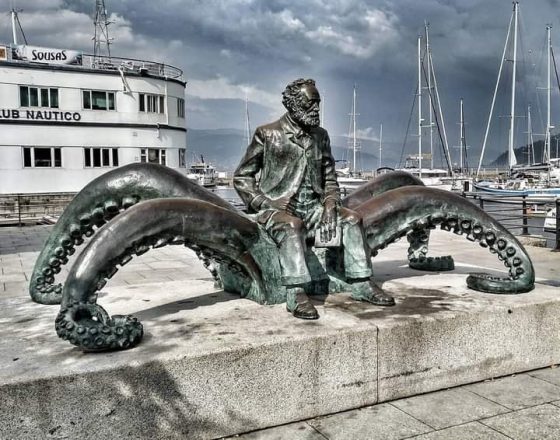
I assume that people who read my newsletters love to read as much as I do. Reading is the best form of escapism. It’s a way of stepping into another life, another world. It can be completely immersive and totally consuming. You can read to match your internal moods or to shift them into a completely different direction. Reading is awesome fun. I’m sorry for those who don’t know this. That said, even some great stories won’t be great for every reader or even be appropriate for a particular time in their lives (or circumstances in the world). I have been reading a lot lately, catching up on the giant pile of books that I acquired during the height of the pandemic but never got around to actually consuming. My pile is still very high, but I did discover some gems and also some books that are simply not for me (or not for me right now). I am getting better at putting those books away partially read — that’s a new skill that I just recently learned. Prior, I felt that I had to read to the last page (appendixes included) once I’ve started a book. Now, I am…