Background Knowledge Errors

The Imagery of Language

he got it all wrong

I left Russia for America when I was thirteen — that’s a difficult age to make cultural and language adjustments. Others in my family are amazing at translating from one language to another; but I’m not particularly good at it. I find learning a new language and a novel way of thinking very hard. If fact, I get stuck in a language — when I think of something in English, it is extraordinary hard for me to retrieve just the right set of words in Russian. It feels like there is a physical divide in my brain between the regions that utilize English and those that work in Russian. For years, I’ve tried to learn French too, and all I have to show for it are just a few scatterings of words. But I love the musicality of French almost as much as that of Russian. I can feel the possibilities, even as I can only grasp a little bit of them. For a wonderfully nuanced discussion of being forced to exist in a new language, I strongly recommend a book by that title: Lost in Translation: A Life in a New Language by Eva Hoffman. I particularly identify with…

Human Limitations

Giraffe-sized Asteroid

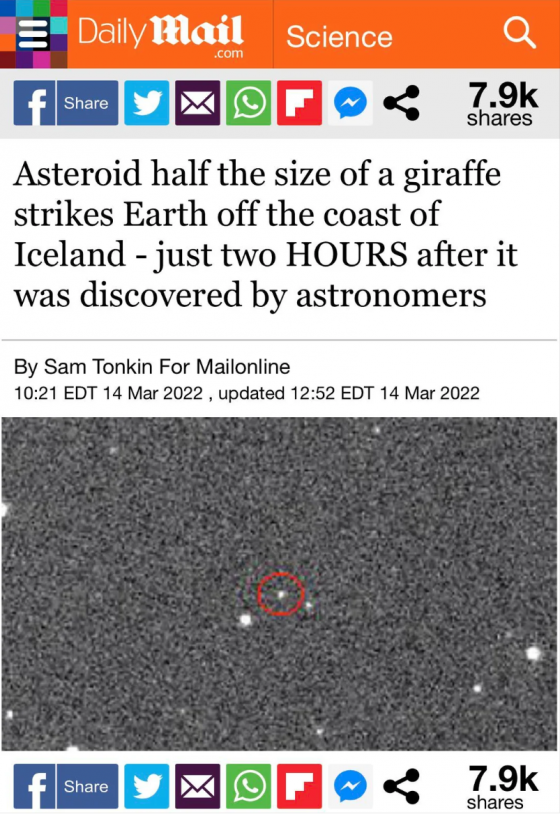
We live in a vast universe that spans enormous scapes of time and space. But humans evolved to understand information in relatable quantities at a human scale. We conceive landscapes mostly in chunks we can easily walk, connected loosely by strands of distances we can comfortably drive. We live in the now, but relate to the future in terms of a past that we dimly remember. We can make plans just within a very narrow scope of time — days, perhaps weeks. The future is always elusive and vague. We don’t comprehend spans of time outside of our experience. The span of a million years, ten million, a hundred million, or even just a thousand are concepts which we can intellectualize about but can’t really feel. Even in our interactions as members of a species, we can each just maintain a web of a few dozen relationships. Space, time, and human interactions are limited for us. We don’t process and, thus, don’t truly comprehend, information of large or very small scales that are beyond our direct experience. It’s not who we are as humans. This has all sorts of ramifications beyond the obvious. It’s why it’s easy for us to…

Neanderthal in The Back Yard

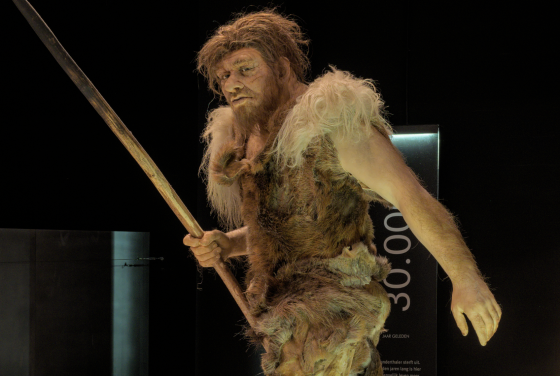
Neanderthal

I was around ten when I had a recurrent dream. Back then, I was good at lucid dreaming — I could make myself dream the same story for weeks on end and remember all of it. It was similar to writing in that it was like watching a story unfold in my imagination. I dreamt many stories this way; although most are lost, there was one that stuck with me about a Neanderthal buried in the permafrost next to the mini merry-go-round in our apartment building’s back yard. We lived in Saint Petersburg, Russia. It was cold and snowy in the winter even if there was no actual permafrost in the courtyard. I must have read something about the marvelous preservation of mammoths, and that gave me the idea. I figured that if those ancient pachyderms could be found in permafrost, so too could early humans. In my dream, I dig under the snow, in the bushes located a few feet from the merry-go-round, and discover a bit of old animal skin. Brushing away a few more layers of snow and dirt, I find what looks like a mummified arm, dressed in clothing made of fur. I know right away…

Playing with ChatGPT

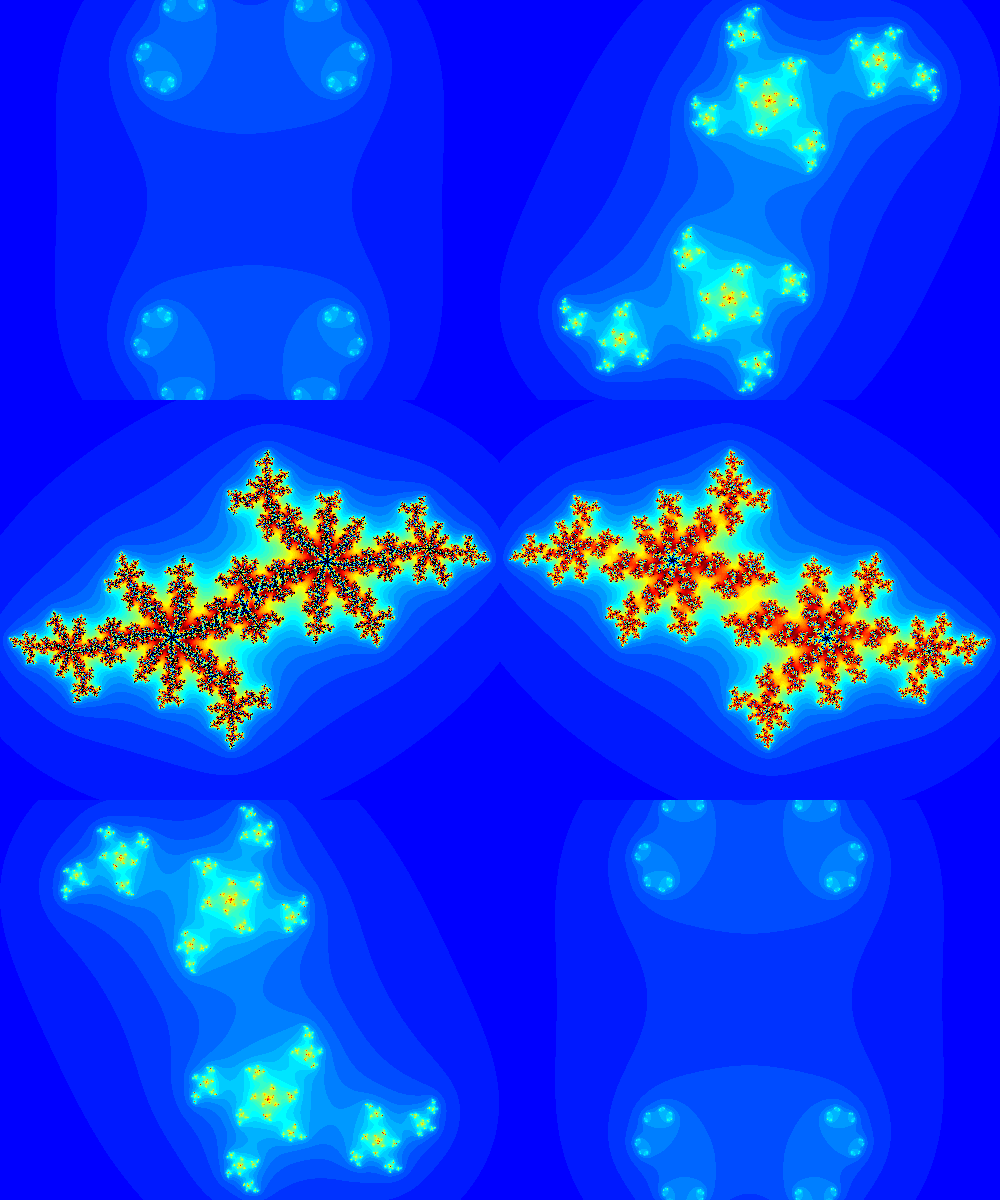
Julia set fractal gif

I am a bit late to the ChatGPT bandwagon — people all over the internet are pointing out badly written prose. But I did want to give it a try. I have hundreds of story ideas that I have jotted down over the years. Most won’t ever be written into an actual story. So it seemed like a fun exercise to give ChatGPT an assignment of writing a short story using some of my notes as prompts. I tried three, iterating on one of those multiple times to see what differences my suggested changes made to the AI-generated story. The results are at the end of this post. The first thing I noticed is that all of the ChatGPT stories were flat — there were no unexpected twists or turns; and the endings sounded the same, each with a strange bit of morality embedded for good measure. The AI had a bit of literary echolalia — some phrases were repeated over and over again. It’s like it liked saying “like” as a verbal tic. I didn’t expect that. Stories tended to start with “In the world…” and conclusions began “In the end…”. The strangest response I got out of ChatGPT…

The Fragility of Normal

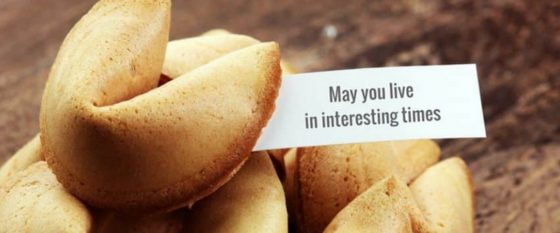
Fortune: May you live in interesting times

We all want to go back to normal. We cry about it and complain: “Enough is enough. We want our lives back.” This need to “go back to normal” is always with us, although maybe on a different scale post-pandemic. But even before Covid, there were always things that disturbed our perception of normal: new teachers, new housing, new jobs, new routines, stores and restaurants closing, cars that break down, challenging illnesses, new bus routes. Towards the end of our vacations, we come to realize that, although adventures are fun, it is good to be home where things are as we expect them to be. This want of predictability, for having our expectations met, is at the crux of a deep-seated need for normalcy. We have a limited capacity for taking in and processing information — we have limited short-term memories. When there is a flood of unfamiliar data, we get overwhelmed. We end up not having enough cognitive and emotional capacity to handle the new stuff on top of all the other things we have to do. Sudden change makes life feel overwhelming. Anchoring Errors This brings me to anchoring errors, which are basically little cognitive traps our minds…

Expanding Definitions

Signal

I have taught children, teens, and adults for many years. And I am noticing a trend — as a people, in the name of a more just society, we try to make our definitions ever more expansive. Sounds like great thing, right? But consider this. Decades ago, children diagnosed as autistic were few and their symptoms had to be severe to get this diagnosis. Now we have an autistic spectrum. More and more children and adults get placed on this spectrum. We seem to want to catch as many autistic individuals as we can by expanding the definition of what it means to be on the spectrum. We are being ever more expansive in the name of justice. But shouldn’t we be expanding the spectrum the other way instead? Perhaps it is better to be more inclusive in our definition of what it means to be on the “normal” spectrum. We are all different. We all have a grab bag or positives and negatives. And that’s a good thing. It takes all of our differences to create a great society. So we can treat ADHD kids as different from “normals” or we can think of them as us. Dividing children…