

Product design is a careful balance between building accommodations for different users and hoping users would compensate for aspects of design that are not well-suited to them. The power of good design is to know where this balance is located.
It’s impossible to accommodate everyone. A chair that is the most comfortable sitting for one person might not work for another at all (some people are short, some are tall, some are wide, some are narrow, some have back problems…). And even a beloved chair only works for in some situations for some particular time in our lives — the rocking chair that we used to read to our kids when they were little…
I talk about a chair because we can all relate: my “homework” chair, my “lucky” stool, my “lazy afternoon” stoop, my “theater” lounge, my “reading” nook, my “power” throne… It’s easy to see how my reading nook would be different from your reading divan or surfing seat. I can come up with compensations: I can add pillows or use the little knobs to adjust the hight. But the more things I have to do to make the sitting arrangement more comfortable, the less likely I’m to do so. There’s an interesting study that shows the results of office chair inspections — most individuals use the factory settings! And the more knobs and adjustment buttons there are on the chairs, the less likely they are to be used. We seem to just know when we like something or when we are comfortable. I know people who devoted a life-time to finding just that special reading chair — the quest is part of the experience.
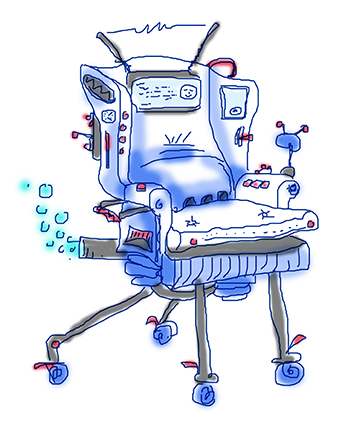 So when I hear from clients the talk of “we want to be everything for every user”, I get a bit discouraged. I try to let them imagine a chair from hell — buttons, levers, pulls, knobs, straps, velcro, additional covers and cushions, wheels and locks, levels and indicators, monitors and readouts, remote controls and environmental adjustments, computer assists and internet support, limited life time warranties and customer relations databases… The wider the imagined audience, the more accommodations have to built-in and the more complex set of compensations the users have to learn how to navigate. And each user has a particular goal for the chair, particular use that they are thinking about…
I want to design great products, for the narrow band of users, who really want to use the features I’m developing. I want my design to fit the goals of the users for this product. Sure, some of my products might get wildly popular. But the more people will use them, the less perfect my product will be. So ultimately, product design is a careful balance between a super wide user group and one that is carefully targeted. Somewhere in the middle there, there’s just the right set of individuals — enough users to make the product profitable, but not so wide that the feeling of custom tailoring is completely gone. Accommodation versus compensation… a product design waltz.
1 comment for “Compensations and Accommodations”